
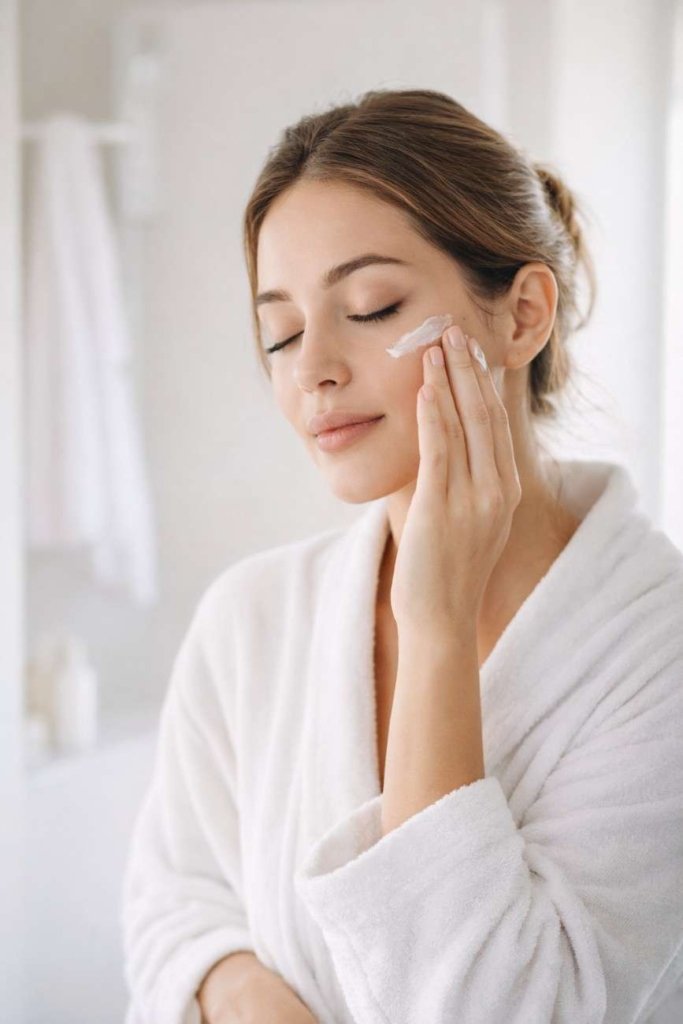
Routine for Glowing skin is not just the result of good makeup—it begins much earlier, in the morning, with a skincare routine that supports the barrier, boosts hydration, protects from environmental stress, and enhances natural radiance. For Indian consumers, morning skincare plays an even more vital role because our environment presents a unique combination of challenges: humidity, heat, dust, UV exposure, pollution, air conditioning, and hard water. All of these can influence how our skin behaves during the day.
Contrary to the belief that skincare requires expensive products or a 10-step K-beauty ritual, a morning routine can be simple, affordable, and highly effective as long as it is done thoughtfully and consistently. Even a basic three- or four-step routine—cleanser, serum, moisturizer, sunscreen—can significantly improve brightness, texture, and hydration within a few weeks.
This blog will guide you through a practical, step-by-step morning skincare routine tailored for the Indian audience. We’ll cover product recommendations (affordable + mid-range), skin types, common mistakes, DIY options, dermatologist insights, and lifestyle habits that complement topical skincare. By the end, you’ll know exactly how to build a morning routine that works for your skin and supports glowing, healthy results throughout the day.
The Skin in the Morning — What’s Happening?
Skin doesn’t simply “rest” at night—while you sleep, a lot is happening on a cellular level. The skin undergoes repair, micro-moisturization, and mild exfoliation. While this is happening, natural oils, sweat, dead cells, and bacteria can accumulate on the surface. Additionally, pillowcases and bedding can harbor dust, hair oils, and residue from hair products. This combination can make the skin look dull or congested by morning.
This is why the morning routine is not just about “washing your face.” It’s about preparing the skin for the day ahead—strengthening the barrier, boosting antioxidants, and protecting from UV and pollution damage.
Understanding Your Skin Type Before Starting a Routine
One of the most important steps in skincare is identifying your skin type. This matters because a product that works wonderfully for someone with oily skin may be too drying for someone with sensitive or dry skin—and vice versa. Indian beginners often skip this step and copy routines from YouTube or Instagram, which can lead to irritation, breakouts, or dissatisfaction with results.
Major Skin Types
Oily Skin
- Shiny appearance
- Enlarged pores
- Makeup slides off easily
- Prone to acne and congestion
- More active sebaceous glands
Oily skin is extremely common in Indian tropical regions (Mumbai, Chennai, Goa, Kolkata) due to humidity.
Dry Skin
- Tightness after cleansing
- Flakiness or dry patches
- Dull tone
- Rough texture
- Barrier often feels compromised
Dry skin is more common in northern cities during winter due to cold + pollution combination.
Combination Skin
- Oily T-zone (forehead, nose, chin)
- Normal/ dry cheeks
- Balanced appearance
- Very common among young Indians
Combination skin can fluctuate based on season and hormones.
Sensitive Skin
- Easily irritated
- Breakouts from new products
- Redness, burning sensation
- Needs minimalist routines
Often seen in people dealing with dermatitis or allergic reactions.
Acne-Prone Skin
- Frequent breakouts
- Blackheads + whiteheads
- Hormonal congestion
- Can be oily or combination
Acne-prone skin requires gentle routines, not harsh scrubbing or over-cleansing.
Quick At-Home Skin Type Test
If you’re unsure about your skin type, try this method:
- Wash your face with a mild cleanser.
- Do not apply anything for the next 1–2 hours.
- Observe how your skin behaves.
Results:
- Shiny = oily
- Tight = dry
- Shiny T-zone + normal cheeks = combination
- Reacts = sensitive
- Breakouts = acne-prone (not always oily)
This simple test helps beginners build rational routines instead of copying trends blindly
Environmental Factors That Affect Indian Skin
Skincare routines are not universal. Something that works for someone in South Korea or Canada may not work for someone in India due to:
✔ weather
✔ humidity
✔ dust
✔ pollution
✔ UV index
✔ lifestyle
The key factors affecting Indian skin include:
1. Heat & Humidity
Causes:
- Excess sebum
- Melting makeup
- Pore congestion
- Dehydration despite oiliness
2. Pollution
Contributes to:
- Free radicals
- Dullness
- Pigmentation
- Inflammation
3. Hard Water
Common in major Indian cities (Delhi, Hyderabad, Bangalore)
- strips natural oils
- weakens barrier
4. UV Exposure
India has high UV index year-round—UV causes:
- tanning
- pigmentation
- melasma
- fine lines
- uneven texture
5. Air Conditioning
Office + home AC creates:
- dehydration
- flakiness
- barrier damage
This is why Vitamin C + sunscreen + moisturizers are essential components of a morning routine here.
Morning Skincare Routine for Glowing Skin (Step-by-Step)
Now let’s get into the heart of this blog: the actual step-by-step routine. While there are optional boosters and luxury add-ons, the basic morning skincare routine includes four fundamental steps:
✔ Cleanser
✔ Antioxidant (Vitamin C)
✔ Moisturizer
✔ Sunscreen
Even if you did just these four steps, consistently, your skin would improve significantly.
Step 1: Cleanser (Start With a Gentle Refresh)
Cleansing in the morning removes:
✔ excess oils
✔ sweat
✔ dust
✔ dead cells
✔ bacteria
✔ overnight residue
Indian consumers often skip morning cleansing assuming “I didn’t apply makeup last night, so I don’t need to wash.” But the skin collects bacteria and oils overnight, particularly if you oil your hair or sleep with fans/AC.
What Type of Cleanser to Use?
Oily Skin:
Gel-based or foaming cleansers work best as they cut oil without stripping hydration.
Examples: Minimalist Salicylic 2% (mid-range), Plum Green Tea Face Wash (affordable)
Dry Skin:
Cream or milk cleansers maintain oils and prevent cracks in the barrier.
Examples: Cetaphil Gentle Skin Cleanser, Simple Moisturising Facial Wash
Combination Skin:
Gel-based with mild foam balances the routine \— not too drying, not too oily.
Examples: Dot & Key Watermelon Cleanser, Neutrogena Hydro Boost
Sensitive Skin:
Non-foaming, fragrance-free, minimal ingredient cleansers work best.
Examples: Bioderma Sensibio Gel Moussant, Simple Refreshing Facial Wash
Acne-Prone Skin:
Salicylic cleansers can help unclog pores, but best used 2–3 times per week (not daily) to avoid over-drying.
Cleansing Tips for Glow
✔ Avoid hot water — it strips oils
✔ Massage cleanser for 20–30 seconds
✔ Pat dry with soft towel (don’t rub)
Harsh cleansers disrupt the barrier, making skin appear dull and irritated.
Step 2: Toner or Essence (Optional Booster)
Toners have evolved significantly in modern skincare. Gone are the days of harsh, alcohol-based toners that stripped the skin. Today, toners and essences focus on hydration, soothing, and prepping the skin for the next steps.
Why Use a Toner or Essence in the Morning?
- Adds an initial layer of hydration
- Helps balance pH
- Allows serums to penetrate better
- Reduces dullness
- Refreshes and calms irritation
In Indian climates, especially in summer or humid cities, a hydrating toner can replace heavy moisturizers for oily skin types.
Best Ingredients to Look For
✔ Hyaluronic Acid (hydration)
✔ Glycerin (humectant)
✔ Rice Water (brightening; popular in K-beauty)
✔ Green Tea (antioxidant + calming)
✔ Aloe Vera (soothing)
✔ Panthenol (barrier support)
✔ Cucumber (cooling)
Who Should Avoid Exfoliating Toners?
AHAs/BHAs in the morning can make the skin more sun-sensitive. If you are new to exfoliation or prone to pigmentation, keep exfoliating acids for nighttime routines unless guided by a dermatologist.
Affordable + Mid-Range Toner Recommendations (India)
- Plum Green Tea Toner (oily/acne-prone)
- Minimalist Polyglutamic Acid Toner (hydrating)
- Etude Soon Jung Toner (sensitive skin; mild + soothing)
- Anua Heartleaf Toner (K-beauty; for sensitivity + acne)
- Cosrx Snail Essence (hydration + texture improvement; mid-range)
If you want to keep your routine simple, you may skip toner entirely. It’s optional, not mandatory.
Step 2: Toner or Essence (Optional Booster)
Toners have evolved significantly in modern skincare. Gone are the days of harsh, alcohol-based toners that stripped the skin. Today, toners and essences focus on hydration, soothing, and prepping the skin for the next steps.
Why Use a Toner or Essence in the Morning?
- Adds an initial layer of hydration
- Helps balance pH
- Allows serums to penetrate better
- Reduces dullness
- Refreshes and calms irritation
In Indian climates, especially in summer or humid cities, a hydrating toner can replace heavy moisturizers for oily skin types.
Best Ingredients to Look For
✔ Hyaluronic Acid (hydration)
✔ Glycerin (humectant)
✔ Rice Water (brightening; popular in K-beauty)
✔ Green Tea (antioxidant + calming)
✔ Aloe Vera (soothing)
✔ Panthenol (barrier support)
✔ Cucumber (cooling)
Who Should Avoid Exfoliating Toners?
AHAs/BHAs in the morning can make the skin more sun-sensitive. If you are new to exfoliation or prone to pigmentation, keep exfoliating acids for nighttime routines unless guided by a dermatologist.
Affordable + Mid-Range Toner Recommendations (India)
- Plum Green Tea Toner (oily/acne-prone)
- Minimalist Polyglutamic Acid Toner (hydrating)
- Etude Soon Jung Toner (sensitive skin; mild + soothing)
- Anua Heartleaf Toner (K-beauty; for sensitivity + acne)
- Cosrx Snail Essence (hydration + texture improvement; mid-range)
If you want to keep your routine simple, you may skip toner entirely. It’s optional, not mandatory.
Step 3: Vitamin C Serum (Glow + Protection)
Vitamin C serums have become one of the most recommended products in the morning routine because they help brighten, reduce acne marks, and protect against pollutants—major concerns for Indian consumers.
Key Benefits of Vitamin C
✔ Fades pigmentation, tanning, and dark spots
✔ Enhances natural radiance
✔ Reduces inflammation
✔ Neutralizes free radicals produced by UV + pollution
✔ Boosts collagen production over time
✔ Works synergistically with sunscreen
This makes it ideal for morning use.
Which Vitamin C Should You Choose?
Vitamin C comes in different forms and percentages.
Beginners
- 5–10% concentration
- Less irritating
- Best for sensitive or acne-prone beginners
Examples: Garnier Vitamin C Serum (affordable), Derma Co 10% Vitamin C
Intermediate Users
- 10–15% concentration
- Balanced performance + results
Examples: Minimalist Vitamin C Serum 10%, Klairs Freshly Juiced Serum
Experienced Users
- 15–20% concentration
More effective for pigmentation, dullness, and sun spots.
Who Should Be Careful?
- People currently using retinol, AHAs/BHAs, or benzoyl peroxide
- Reactive sensitive skin
- Severe acne or compromised barrier
Patch testing is important for new users.
Application Tips for Better Glow
✔ Apply on slightly damp skin for improved absorption
✔ Use in the morning + follow with sunscreen
✔ Store in a cool, dark place (Vitamin C oxidizes)
Affordable to Mid-Range Vitamin C Options in India
- Minimalist 10% Vitamin C (effective + budget)
- Derma Co 10% or 15% Vitamin C (pigmentation-oriented)
- Plum Vitamin C 15% (brightening + vegan)
- Klairs Freshly Juiced (mild + K-beauty glow)
- Garnier Vitamin C (beginner + accessible)
Using Vitamin C consistently for 6–12 weeks can visibly improve brightness and reduce post-acne marks.
Step 4: Moisturizer (Hydration + Barrier + Radiance)
Moisturizers are often misunderstood in India. Many with oily skin believe they don’t need moisturizer, but skipping hydration can trigger even more sebum production. Moisturizers lock in hydration, support the barrier, and prevent dullness during the day.
What Does a Moisturizer Do?
✔ Locks in moisture
✔ Reduces transepidermal water loss (TEWL)
✔ Strengthens barrier
✔ Allows serums to perform better
✔ Prevents dehydration lines
✔ Improves makeup application
Texture Selection for Indian Skin Types
Oily + Acne-Prone Skin
Choose: gel-based, water-based, non-comedogenic formulas
Best during summers or in humid regions.
Examples:
- Neutrogena Hydro Boost
- Plum Green Tea Gel Moisturizer
Dry + Sensitive Skin
Choose: cream-based, thicker barrier creams
Best during winters or in AC-heavy environments.
Examples:
- Minimalist Sepicalm Moisturizer
- Cetaphil Moisturizing Cream
- Simple Replenishing Moisturizer
Combination Skin
Use gel on T-zone + cream on cheeks OR switch seasonally.
Mid-Range Options
- Dot & Key Watermelon Cooling Gel
- Klairs Midnight Blue Calming Cream (sensitive)
- Dr. Sheth’s Moisturizers (India-specific pigmentation focus)
Step 5: Sunscreen (The Most Important Step for Glow)
No product delivers long-term glow like sunscreen. Sunscreen prevents tanning, pigmentation, dullness, melasma, fine lines, and uneven texture—top concerns for Indian consumers.
UV + India: Why Sunscreen Matters More Here
India experiences high UV radiation year-round, even indoors. Even a short walk to office or college can induce tanning or oxidative stress.
What Type of Sunscreen Should You Choose?
SPF 30–50
Minimum SPF 30 for indoor days
SPF 50 for outdoor or travel days
Texture Matching
- Oily skin → gel-based sunscreen (matte + water-resistant)
- Dry skin → cream-based sunscreen (hydrating)
- Sensitive skin → mineral sunscreen (zinc/titanium dioxide)
Affordable + Mid-Range Sunscreen Picks (India)
- Minimalist SPF 50
- Derma Co Niacinamide SPF 50
- Fixderma Shadow Gel
- Re’equil Oxybenzone-Free Sunscreen
- Lakme Sun Expert (drugstore option)
How Much Sunscreen to Apply?
Dermatologists recommend the 3-finger rule for face + neck.
Reapplication Tips
- Reapply every 3–4 hours outdoors
- Powder sunscreens are useful for makeup users
If there’s one step to prioritize for glowing skin, this is it.